
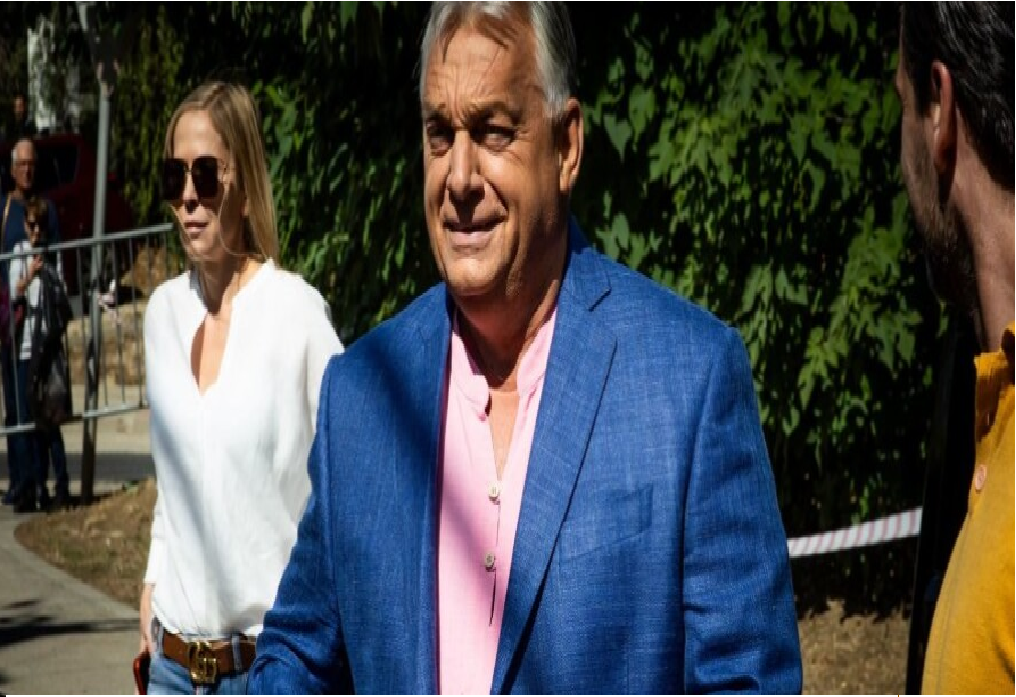
Former Hungarian Prime Minister Viktor Orban has returned to the political arena after a summer break, calling for “national resistance” against the new government and declaring that the grace period for what he described as “neo-communists” is over.
Orban made his first appearance at the Kötcse Picnic since his Fidesz party lost power after 16 years in government. The informal gathering near Lake Balaton brought together figures from Hungary’s political, business, cultural and intellectual circles.
His return comes at a difficult moment for Fidesz. The party suffered a major defeat in the April 2026 election, and its support has reportedly fallen sharply. Orban was nevertheless re-elected as Fidesz president in June, standing as the sole candidate.
Fidesz Prepares for Opposition
In a closed-door speech, Orban argued that it was too early to assess the reasons behind the election defeat. Instead, he called on Fidesz to reorganise and become a stronger political force over the next six months.
He repeated several themes that defined his previous campaigns, accusing Prime Minister Peter Magyar’s Tisza government of “recolonising” Hungary and handing control of the economy to Brussels.
Orban insisted that Hungary must remain sovereign and accused the Tisza Party of serving foreign interests. He also urged right-wing forces to remain united, warning that political fragmentation could prevent them from returning to power.
In a separate interview with Fidesz-friendly HirTV, Orban rejected plans for Hungary to adopt the euro by 2030, arguing that the move would lead to austerity. He also dismissed corruption allegations against the previous government and warned that officials involved in the new government's asset-recovery institutions could face legal and financial consequences if Fidesz returns to power.
Government Hits Back
The new government has responded strongly to Orban’s accusations. Transport and Investment Minister David Vitezy criticised the former government’s major infrastructure projects, including the Budapest-Belgrade railway, the renovation of Budapest metro cars and the Paks II nuclear project.
Vitezy argued that these deals placed heavy financial burdens on Hungary and benefited businesses connected to Fidesz.
Meanwhile, Prime Minister Peter Magyar has sought to keep pressure on Orban by highlighting controversies surrounding a children’s home in Bicske.
Magyar said Orban had personally recommended the institution’s director for a state honour despite longstanding allegations concerning his conduct. Orban said the recommendation had been submitted to him by another person and directed questions about it elsewhere.
Magyar later identified Reformed Church Bishop Zoltan Balog as the person who made the recommendation.
New Child Protection Measures
Magyar’s government has also announced a HUF 10 billion (€27 million) programme aimed at improving conditions in children’s homes, including additional places and emergency accommodation.
The government plans a two-stage pay increase for workers in the sector, with the first rise expected in autumn.
Magyar also proposed changes to Hungary’s adoption system that could potentially make it easier for same-sex couples to adopt. He argued that adoption decisions should be made by professionals based on the best interests of the child rather than requiring ministerial approval.
Orban’s return signals that Fidesz is preparing for an aggressive period in opposition. Rather than abandoning its previous political approach, the party appears set to continue emphasising national sovereignty, opposition to Brussels and criticism of migration and foreign influence as it attempts to rebuild its support.