
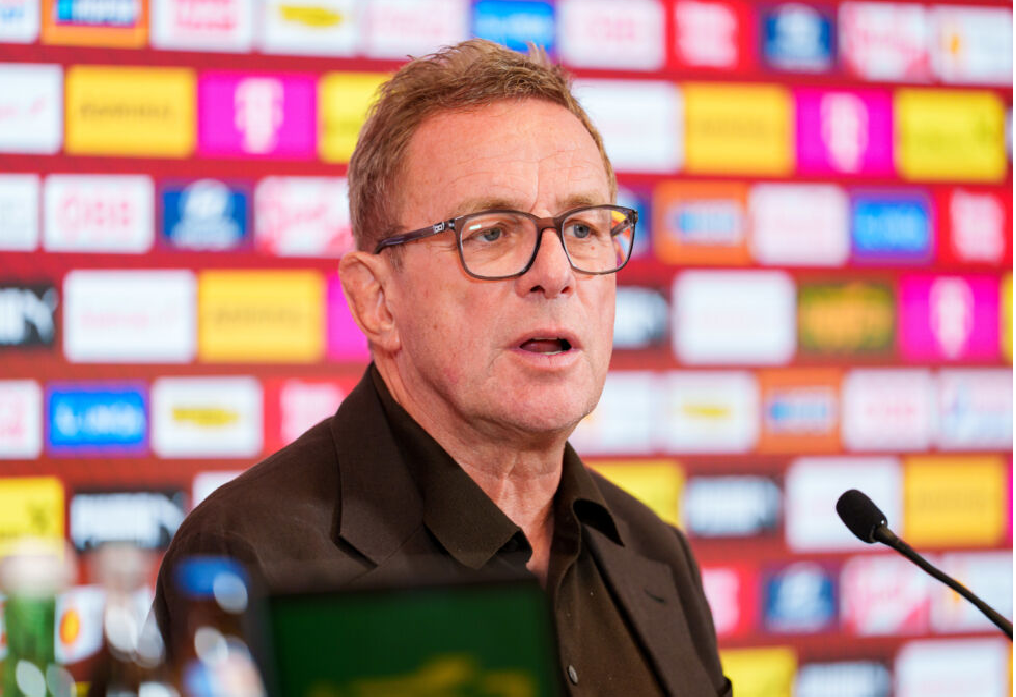
Austria reached the knockout stage but eventually suffered defeats against eventual finalists Argentina and Spain. While Rangnick considered the tournament a success in terms of results, he believes the team did not consistently reach the physical and tactical levels it had shown at EURO 2024.
Too Much Time Off?
Austria’s training camp in Santa Barbara offered excellent facilities, but Rangnick now feels the players may have been given too much freedom for activities such as golf and family outings.
The coach said the team had initially believed time away from football would benefit the players mentally and physically. However, he now believes there should have been more demanding training sessions and greater intensity.
Rangnick also questioned the team’s accommodation setup. Unlike EURO 2024, when the squad stayed together in a more communal environment, the players in Santa Barbara were spread across smaller houses. According to Rangnick, this may have reduced opportunities for natural team-building activities.
Physical Condition a Major Concern
One of Rangnick’s biggest concerns was Austria’s physical performance. At EURO 2024, the team ranked among the top three in several key physical parameters relevant to its playing style. At the World Cup, however, those figures reportedly dropped to between 25th and 35th.
Several players were also not fully match-fit when the tournament began. Patrick Wimmer and Florian Grillitsch only regained full fitness shortly before the opening match against Jordan, while six other players were considered healthy but not completely ready for competitive action.
Rangnick believes this lack of physical sharpness prevented Austria from maintaining the intensity required against elite opponents such as Spain and Argentina.
Germany Could Have Been a Different Story
Despite his criticism, Rangnick believes Austria had reasons to be proud. The team reached the World Cup knockout stage for the first time in 28 years and secured a World Cup victory for the first time in 36 years.
He also suggested that Austria could have competed strongly against Switzerland or Germany had the squad been in better condition.
However, Rangnick acknowledged that the team did not consistently produce the performances he expected. He said Austria showed its best level only during certain phases of matches, while games against top opponents require every player to perform at maximum intensity for almost the entire match.
Marcel Sabitzer was singled out as one of the few players who consistently reached that level, while goalkeeper Alexander Schlager was also praised.
Xaver Schlager Struggled
Rangnick also admitted that midfielder Xaver Schlager had a difficult tournament. The coach described his World Cup as a significant dip in form and revealed that Schlager unusually requested to be substituted at half-time during the Algeria match.
Rangnick also highlighted the absence of Christoph Baumgartner, whom he considers a crucial player for Austria’s pressing and transition game.
A World Cup to Remember
Despite the shortcomings, Rangnick still considers the tournament a memorable experience. He recalled videos of Austrian children celebrating their team’s matches in classrooms early in the morning as one of the most emotional moments of the campaign.
The dramatic final stages of the Algeria match, including the late goal and Sasa Kalajdzic’s equaliser, also remain among his strongest memories.
Financially, the World Cup proved valuable for the Austrian Football Association (ÖFB) as well. The tournament generated around €11.5 million in gross revenue. Almost €2 million is expected to be distributed among the Austrian Bundesliga and regional associations, while the ÖFB itself will retain a low seven-figure sum.
Rangnick’s conclusion is clear: Austria achieved its major World Cup objective, but the experience has also exposed areas that need improvement — particularly physical preparation, team togetherness and training intensity.