
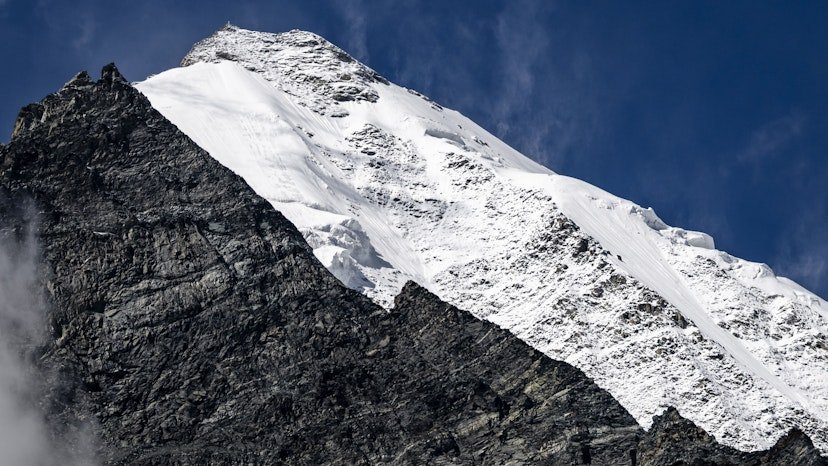
The Weisshorn East hanging glacier in Switzerland's Valais Alps is under an imminent collapse warning after an intense summer heatwave accelerated ice movement and triggered multiple large-scale icefalls. Local authorities in Randa, a municipality situated directly beneath the 4,505-metre peak near Zermatt, elevated the regional threat mechanism to Alert Level 3 following structural ruptures in the unstable ice mass.
Glaciologists monitoring the peak via a specialized radar network reported a severe spike in glacial velocity. Large sections of debris have already sheared off the face, coming to a temporary rest on a lower plateau. Experts warn that the remaining volatile ice mass could either slowly disintegrate over several weeks or suffer a singular, catastrophic collapse resulting in a massive ice avalanche.
While computer simulations indicate that the primary debris field is unlikely to reach residential zones, aggressive precautions are underway. A strict security perimeter has been enforced, closing all hiking trails and cycling routes trailing into the high-risk zone. No evacuation orders are currently active for Randa residents, as officials state the topography presents a distinct situation compared to the devastating May 2025 glacier collapse in nearby Blatten.
The destabilization highlights a broader ecological crisis across Switzerland. According to the Swiss Glacier Monitoring Network (GLAMOS), the nation’s glaciers are losing roughly 400 cubic metres of water per second. A lack of winter snow, a prolonged European heatwave, and dark Saharan dust deposits have combined to melt the protective snow layers and rapidly thaw the high-altitude permafrost holding the peak together. Local authorities maintain 24-hour surveillance as the situation develops.