
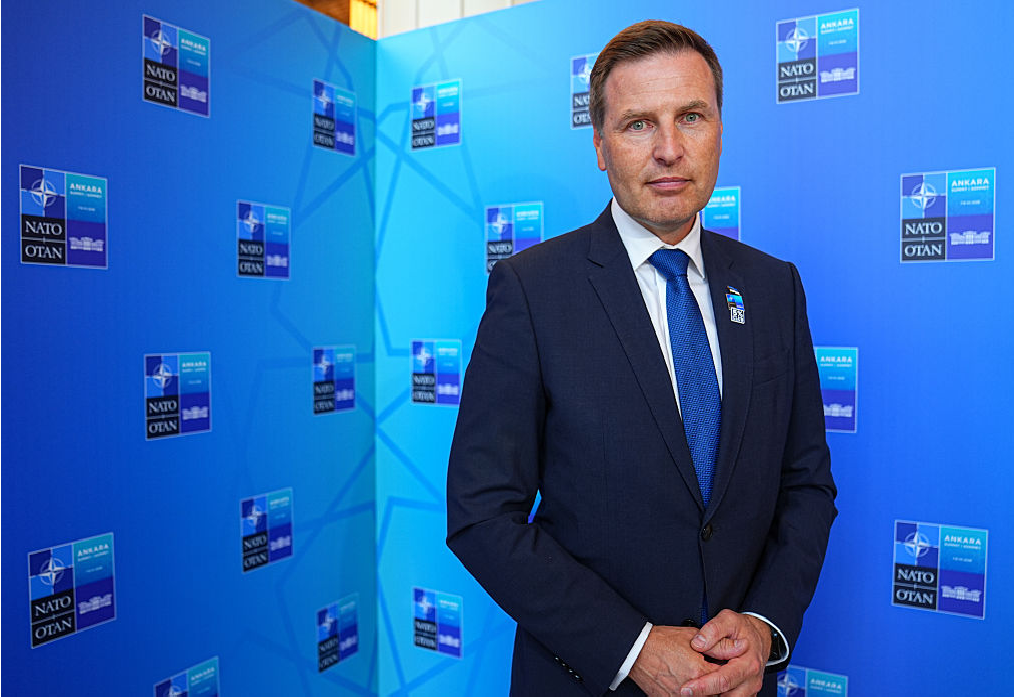
Estonia’s Defence Minister Hanno Pevkur has announced his resignation, saying he was taking political responsibility for problems identified in the country’s defence sector following criticism from the National Audit Office.
Pevkur announced his decision late Wednesday, saying that a political leader must be prepared to take responsibility. He said the audit findings, particularly those concerning Estonia’s defence forces and the Estonian Centre for Defence Investments (ECDI), raised important questions of political accountability. He added that he would hand over responsibility for the defence portfolio to Prime Minister Kristen Michal at an appropriate time.
Defending his record in office, Pevkur said Estonia had made the right decisions to strengthen its national defence and was now “better protected than ever before”. He also stressed the importance of continuing support for Ukraine, arguing that helping Kyiv was closely linked to Estonia’s own national security.
His resignation follows a dispute surrounding Estonia’s attempt to supply Ukraine with large-calibre artillery ammunition using profits generated from frozen Russian assets.
Estonia had agreed to purchase ammunition worth tens of millions of euros from Datasel, an Indian-owned ammunition manufacturer based in Italy. The deal was financed through an EU mechanism that allows member states to use net windfall profits from immobilised Russian assets to support Ukraine. The ammunition was expected to be delivered within a tight six-to-eight-month timeframe.
Estonian officials acknowledged that the urgent procurement involved greater-than-usual risks. However, subsequent inspections reportedly found that some of the ammunition failed to meet the required standards.
Following the findings, the ECDI terminated the contracts, and Estonia took the dispute to arbitration. Estonian media have reported that between €60 million and €70 million in advance payments remain tied up in the dispute, while Tallinn is working with the European Commission to find a possible solution to recover the funds.
Datasel has disputed Estonia’s account of the events. The company said it was “the victim” of the dispute and rejected the reasons given for terminating the contracts.
According to Datasel, it supplied and invoiced €58 million worth of material against €59 million in advance payments and said that inspections carried out under the contracts had not established any quality problems.
The company also argued that the project involved a complex international supply chain requiring multiple government approvals, regulatory clearances and authorisations across different jurisdictions. Datasel said delays in these processes affected the project and that the ECDI later refused to accept remaining material, including goods already in production or ready for delivery, before terminating the contracts.
The dispute has placed renewed scrutiny on Estonia’s defence procurement procedures and the risks involved in rapidly supplying military equipment to Ukraine.